

Walk into a dispensary, open a jar, and you know within seconds whether a flower feels “right” for you. Sometimes it is bright and citrusy. Sometimes it is earthy and heavy. Sometimes it smells like pine needles, lavender, fresh herbs, or straight-up fuel. That instant reaction is not random. A big part of it comes down to terpenes.
At Resinate, we see terpene questions come up in two moments. The first is when someone wants to shop smarter than “highest THC.” The second is when someone has tried a few products, felt wildly different results, and wants to know why. Terpenes are a major part of the answer because they shape aroma and flavor, and they may influence how a product feels when paired with cannabinoids like THC and CBD.
This guide explains what terpenes are, why they exist in the plant, how they can affect your cannabis experience, and how to use terpene information to choose products more confidently.
What are terpenes?
Terpenes are aromatic compounds produced by many plants. They are a major reason oranges smell like oranges, pine trees smell like pine, and lavender smells like lavender. Cannabis produces a wide range of terpenes too, and those terpenes contribute heavily to the scent and flavor differences between cultivars. Scientific reviews of cannabis chemistry discuss terpenes and terpenoids as important constituents that help explain why whole-plant cannabis can feel more complex than isolated cannabinoids alone.
A simple way to think about terpenes is this: cannabinoids help determine intensity and direction, while terpenes help determine personality. That is not a perfect model, but it is useful when you are shopping.
Terpenes vs terpenoids, what is the difference?
You will see both terms in articles and lab reports.
Terpenes are the basic aromatic compounds. Terpenoids are terpenes that have been chemically modified, often through oxidation or other processes that can occur during drying, curing, and storage. Many sources use “terpenes” as the umbrella term in everyday conversation, and most menus do the same. If you see “terpenoids” in a scientific context, it is usually pointing to the broader family of related aromatic molecules.
For shopping purposes, treat them as part of the same practical category: the aroma and flavor molecules that help shape experience.
Why does the cannabis plant make terpenes?
Terpenes are not there to impress humans. They serve ecological roles for plants, including interactions with the environment, pests, and other organisms. Across plant science, terpenes are often discussed as part of a plant’s chemical toolkit, helping with things like defense and communication.
In cannabis specifically, terpene production is tied to the plant’s resin chemistry. That resin is also where cannabinoids concentrate, which is one reason terpene-rich products often feel “full” and flavorful.
Why terpenes matter to your cannabis experience
1) Terpenes shape aroma and flavor, which shapes preference
This part is obvious the moment you smell flower. Terpenes are the primary drivers of cannabis aroma. They also influence taste, especially when you vaporize or smoke flower and concentrates, since terpene content affects what you actually perceive on inhale and exhale.
If you have ever loved the smell of a product but disliked how it felt, or disliked the smell but loved the effect, you already understand something important. Aroma is not everything, but it is a powerful signal.
2) Terpenes are one of the most practical ways to shop beyond strain names
Strain names are useful, but they are not always consistent across growers and markets. Terpene profiles are more descriptive of what you are actually getting in the jar.
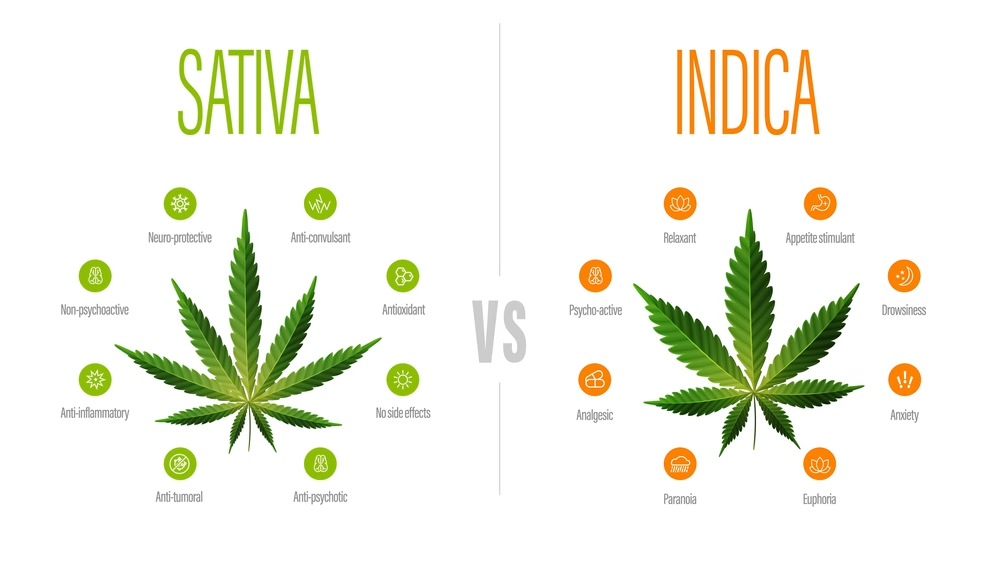
Research has even suggested that the common “sativa vs indica” labels do not reliably map to overall genetic differences, and that the labeling consumers experience often correlates more with a smaller set of terpene differences tied to aroma. A Nature Plants study found that sativa and indica labeled samples were genetically indistinct on a genome-wide scale, and that labeling was instead associated with variation in a small number of terpenes controlled by terpene synthase genes.
That does not mean “indica” and “sativa” are useless words. It means terpene profiles can be a more reliable compass if you want consistency.
3) Terpenes may influence effects, but the science is still developing
This is the big question: do terpenes change how cannabis feels?
Scientific literature supports the idea that terpenes have biological activity and may interact with cannabinoids in meaningful ways. A review focused on terpenes paired with cannabinoids discusses potential synergy and the “entourage effect” concept, while also noting that clinical verification is still limited.
At the same time, the entourage effect is not a settled debate. A Scientific Reports paper notes that the terpene modulation hypothesis has been controversial and investigated it directly, finding evidence that certain terpenes produced cannabimimetic behaviors in mice and could be selectively additive with a cannabinoid agonist, which provides conceptual support for terpene contributions, at least in that experimental setting.
The practical takeaway for shoppers is balanced: terpenes are not magic spells, but they likely matter, and they are one of the best real-world tools for predicting whether a product will feel bright, heavy, clear, cozy, or sharp.
The most common cannabis terpenes, and what they are known for
Terpene effects can vary by person, dose, and the rest of the chemical profile, so treat these as directional, not guaranteed. At Resinate, we use terpene “lanes” to help customers narrow choices, then we dial in cannabinoid strength and product format to match comfort level.
Myrcene
Myrcene is often associated with earthy, musky, herbal aromas. Many consumers connect myrcene-forward profiles with a heavier, more relaxing feel, especially in evening products. If a flower smells like damp earth, cloves, or ripe fruit, myrcene may be part of the picture.
Limonene
Limonene is the citrus-peel terpene. It is often linked with bright, uplifted, mood-forward profiles. Limonene-dominant products can feel refreshing and “up,” which is great for some people and too stimulating for others, especially at higher THC.
Pinene
Pinene smells like pine needles and fresh forest air. Many people describe pinene-forward products as crisp, alert, and clearer. If you love piney aromas and want something that does not feel overly heavy, pinene is a terpene to watch.
Linalool
Linalool is floral and lavender-like. It is commonly associated with calming, soft, winding-down profiles. If you want a gentler vibe that feels soothing rather than buzzy, linalool is often a good lane to explore.
Beta-caryophyllene
Caryophyllene is peppery, warm, and spicy. It stands out because it is discussed frequently in the scientific literature for its interaction with cannabinoid-related pathways, and it is a common terpene in many “grounding” profiles.
In practical terms, caryophyllene-heavy products often smell like black pepper, cloves, or warm spice.
Humulene
Humulene is earthy and woody, often described as hoppy. It can show up alongside caryophyllene and contribute to a more grounded, herbal profile.
Terpinolene
Terpinolene is less talked about by casual shoppers, but it is a common driver of fresh, herbal, sometimes sweet aromas. Products with noticeable terpinolene can feel more “airy” or bright, depending on the rest of the profile.
Ocimene
Ocimene is often described as sweet, herbal, and slightly tropical. It can add a lighter, fresh character to aroma and may show up in more energetic or uplifting profiles.
Nerolidol
Nerolidol is often described as woody or floral, sometimes with a soft, tea-like quality. It is commonly found in certain calming profiles, especially when paired with linalool-like aromatic direction.
If you want the simplest shortcut, try this: follow your nose first, then confirm the terpene profile, then choose the potency that matches your tolerance.
How terpene profiles show up on labels and lab reports
Depending on your state and product type, terpene information may appear in different places:
Some flower jars list top terpenes with percentages.
Some concentrates include a terpene percentage and a breakdown.
Some edible packages do not list terpenes at all, especially if the flavoring is not cannabis-derived.
Many brands provide a COA, a certificate of analysis, that lists the terpene panel.
When you look at a terpene panel, do not get stuck trying to memorize everything. Focus on the top three to five terpenes by percentage. Those usually drive the main aromatic character.
Also remember that a terpene panel is a snapshot. Storage and time matter.
Why the same “strain” can smell different from one brand to another
Even when two products share a name, they may not share identical chemistry. Differences can come from:
Genetic variation (different cuts or seed versions under the same name).
Growing environment, nutrients, and harvest timing.
Drying and curing technique.
Storage conditions and age.
That is one reason terpene shopping beats name shopping. Two products called the same thing can have very different terpene dominance, and therefore a very different vibe.
How terpenes get lost, and how to keep them
Terpenes are volatile, meaning they evaporate more easily than cannabinoids. Heat, light, oxygen, and time can degrade or change terpene composition.
If you care about flavor and experience, treat terpene preservation like part of quality.
Store flower in a cool, dark place, sealed well.
Avoid leaving products in hot cars or near windows.
Use flower while it is still fresh enough to smell vibrant.
For concentrates, keep lids sealed and avoid unnecessary warming.
Freshness is not just about cannabinoids. It is about terpenes staying where they belong.
Do terpenes make you high?
Terpenes are not the primary intoxicants in cannabis. THC is the main compound associated with intoxication. Terpenes can influence aroma, flavor, and potentially the character of effects, but they are not the same thing as taking a higher dose of THC.
This distinction helps reduce anxiety for beginners. You can explore terpene-rich profiles without chasing higher potency.
Using terpenes to choose the right product at Resinate
At Resinate dispensary, we like to start with one question: What do you want the experience to feel like in your body and mind?
If you want calm and unwind, we often look for linalool, myrcene, caryophyllene, or nerolidol direction, then choose an appropriate THC level.
If you want uplift and daytime brightness, we often look for limonene, pinene, ocimene, or terpinolene direction, then keep THC within a range that does not tip into jittery or overstimulated.
If you want balanced, it often means a mixed terpene profile where no single terpene dominates, plus a moderate cannabinoid dose.
The goal is not to find the “best terpene.” The goal is to find the terpene lane that fits your nervous system and your plans.
A note on the entourage effect, and why “whole plant” often feels different
Many people report that full-spectrum products feel different than isolates. Scientific discussions of terpenes and terpenoids in cannabis explore potential pharmacological roles and interactions, including the idea that terpenes could contribute to therapeutic effects in certain contexts.
At the same time, researchers have also published work questioning or refining how entourage claims should be interpreted, emphasizing that mechanisms can differ by terpene, by dose, and by model.
For everyday use, the safest, most accurate conclusion is this: cannabis is a complex mixture, terpene profiles likely contribute to the overall experience, and you will get better results if you pay attention to the whole profile rather than a single number.
Common terpene questions we hear all the time
“What are the best terpenes for anxiety?”
People often look for linalool and caryophyllene direction first, sometimes myrcene at night. The more important factor is usually keeping THC at a comfortable dose, because THC can be the thing that pushes an anxious person into discomfort if it is too high.
“Why does one product give me energy and another makes me sleepy?”
Part of it can be terpene direction, part of it can be dose, and part of it can be your set and setting, sleep debt, stress level, and what you ate that day. Terpenes are a helpful clue, but they are not a complete prediction engine.
“Can I be sensitive to terpenes?”
Some people are sensitive to strong aromas in general, and some people prefer lower-terpene products or less pungent profiles. If you notice irritation or discomfort with certain products, talk with a budtender and consider gentler formats and lower aromatic intensity.
The simplest way to start using terpenes today
If you want a clean, practical way to apply all of this without turning cannabis into homework, try this approach:
Pick one effect goal, like calm evenings or bright daytime.
Pick one product format, like flower or vape, so timing is consistent.
Pick a terpene lane, like linalool-forward or limonene-forward.
Start at a moderate potency that you know you tolerate.
Notice how you feel, then refine.
Within a couple of sessions, you will start recognizing patterns. That is when terpene shopping becomes easy. You stop guessing. You start choosing.
If you are ever unsure, bring the question to Resinate. Tell us how you want to feel, what you have tried, and what you want to avoid. We can help you read terpene profiles, compare options side by side, and land on something that makes sense for your tolerance, your schedule, and your taste.