
The terms Indica, Sativa, and Hybrid get tossed around like casual slang. But beneath the shorthand lie real distinctions, and a little nuance that can make a big difference in your experience. Here in our Worcester and Northampton, Massachusetts locations we believe your choice should not just be about label or legend but about how you want to feel, when and why. So let’s walk together through those three categories, what they mean, what they actually promise, and how to use them as a starting point for real‑world decisions.
Setting the Scene: Species, Culture, and Crossed Genetics
Originally the classification system was simply botanical: the genus Cannabis includes species such as Cannabis indica and Cannabis sativa, as early botanists observed different plants growing in different regions. Indica plants tend to be shorter, broader‑leafed, and adapted to harsher climates. Sativa plants grow taller, with narrower leaves and longer flowering cycles.
But here’s the rub: in today’s Massachusetts market, hybrids dominate. Through extensive breeding and cross‑pollination, pure Indica vs pure Sativa distinctions have blurred. A recent genetic study revealed that many modern strains labelled Indica or Sativa do not cluster neatly into those categories when their DNA is assessed. According to a publication in Nature Plants, “the classification based on common names does not reliably reflect genetic structure.” So while the labels remain helpful shorthand, think of them more as guides than guarantees.
Understanding Indica: The Restful Ally
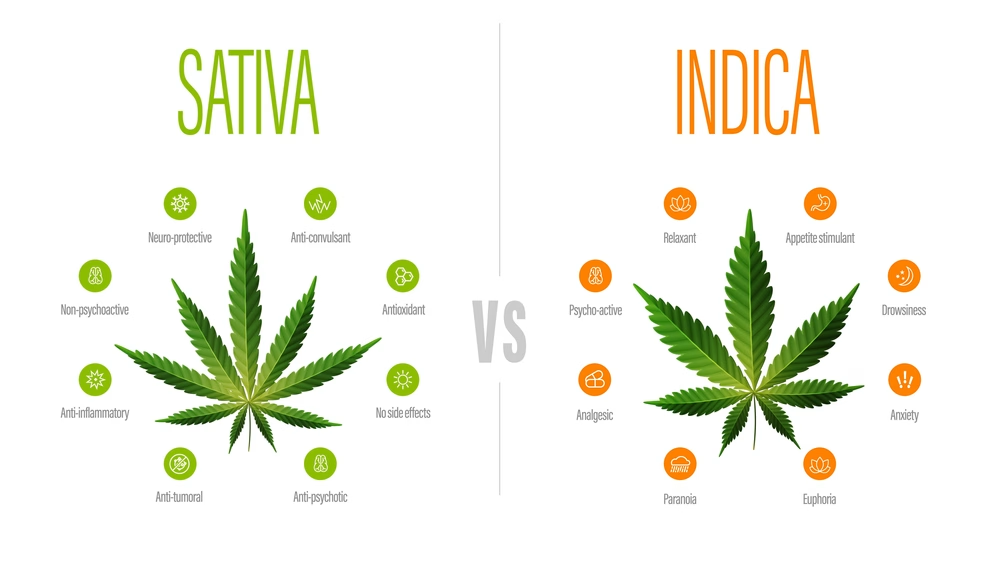
When someone says “Indica,” often they mean: “I want to relax, I want my body to unwind, I want to sink into the couch.” That’s a fair shorthand. These strains are typically associated with a body‑heavy or grounding sensation, which makes them a popular choice for evening use, rest, or calming down after a busy day.
One reason: terpenes. For example, the terpene myrcene is often found in higher concentrations in Indica‑leaning strains and is believed to contribute to sedative, relaxing qualities. Resources like Leafly report that myrcene is “one of nature’s strongest sedatives.” (see https://www.leafly.com/news/science-tech/myrcene-terpene-profile)
At Resinate we might point you toward Indica‑dominant varieties when you say you’d like to unwind, maybe relieve muscle tension or ease into sleep. But we always remind: check the THC/CBD ratio, know your tolerance, and remember even Indica can differ wildly from strain to strain.
Understanding Sativa: The Upbeat Explorer
On the flip side, “Sativa” often signals: “I want energy, I want mental stimulation, I want to do something or create something.” Sativa‑dominant strains are frequently chosen for daytime use, creative projects, social settings, or when one wants an uplifted mood.
Again it comes down to chemistry. Terpenes like limonene and pinene are more common in Sativa‑leaning strains and may support alertness or elevated mood. Terpenes can influence mood and cognition in concert with cannabinoids.
At our Massachusetts dispensaries, when a customer says they’d like something for socializing, brainstorming, or just getting through the day with more pep, we’ll often suggest a Sativa‑leaning profile, but again always with the caveat: individual response varies.
Understanding Hybrid: The Best of Both, With Variation
Hybrids are now the norm in the legal market. A hybrid is simply a strain bred from Sativa and Indica parents (or further back‑crossed combinations). They can lean toward Indica or Sativa traits, or sit somewhere in the middle.
Here the mantra is: “Know your strain, don’t just rely on the label.” For example, a “balanced hybrid” might offer moderate body relaxation and mental clarity; an “Indica‑dominant hybrid” might lean heavy on the calming side; a “Sativa‑dominant hybrid” might favor the uplift but still carry soothing undertones.
What matters most is the entourage effect, how cannabinoids and terpenes combine to produce overall effect. In other words: two hybrids labelled similarly might still behave differently depending on their precise chemical “recipe.”
So when you’re shopping at Resinate, the hybrid category lets us tailor suggestions more precisely: “You want something before a film with friends? Balanced hybrid.” “You’re heading into an active day? Sativa‑dominant hybrid.” “Need to relax but keep your head on? Indica‑dominant hybrid.”
Practical Guidance: How to Choose at Resinate
Here is a short framework we use in‑store to help patrons navigate:
- Define your intention: Are you winding down? Getting going? Somewhere in between?
- Check the label: Indica, Sativa, Hybrid, yes, but then also note dominance, THC/CBD ratio, and terpene highlights.
- Start moderate: Especially if you’re new or returning—hybrids can still surprise you.
- Match to activity/time: Want to ease into sleep → Indica‑leaning. Working on art, socializing, errands → Sativa or Sativa‑dominant hybrid. Evening unwind but still lucid → Indica‑dominant hybrid.
- Ask the team: Our Massachusetts locations prioritize education and transparency, so our bud‑team will walk you through product types, effects, and responsible use.
Whether you visit our Worcester or Northampton location, we’re ready to assist—because beyond botanical names, we’re here to help you feel good, informed, and safe.
Matching Cannabis Types to Everyday Scenarios
Here’s a sample list of activities matched with cannabis types you might find at Resinate:
- Couching up for a movie night → Indica or Indica‑dominant hybrid
- Morning creative session with coffee and sketchpad → Sativa or Sativa‑dominant hybrid
- Pre‑concert or social hangout → Balanced or Sativa‑dominant hybrid
- Deep cleaning the apartment or tackling errands → Sativa
- Reading a book in soft lighting before bed → Indica
Looking Beyond the Labels: THC, CBD & Terpenes
Labels like Indica/Sativa/Hybrid are useful, but they’re just the first layer. At Resinate we encourage you to also consider:
- THC: The primary psychoactive cannabinoid. Higher levels typically mean stronger effect, but not necessarily “better.”
- CBD: Non‑intoxicating, may provide calming effects; many users prefer higher CBD or a ratio (e.g., 1:1 THC:CBD) for gentler experiences.
- Terpene profile: These are the aromatic compounds, myrcene, limonene, pinene, caryophyllene, etc., that influence flavor, aroma and effect alongside cannabinoids.
So when you pick a strain labelled “Sativa‑dominant” at Resinate, note whether its terpene panel emphasizes limonene (mood boost) or pinene (alertness). Likewise for an Indica strain: myrcene or linalool might hint at deeper relaxation.
Why Resinate & Why Massachusetts
Here in Massachusetts the cannabis industry is built on regulatory rigor, community standards and product accountability. At Resinate we’re vertically integrated: cultivation, manufacturing and retail all under one roof, so you benefit from clear sourcing and quality oversight.
We pride ourselves on clarity, fairness, and inclusive education, whether you’re a seasoned user or brand‑new. Our stores in Worcester and Northampton are designed to be approachable, welcoming and focused on your comfort and experience.
Use the Labels and Then Listen to Yourself
Indica, Sativa, Hybrid, think of them like musical genres. They tell you something about style but not the full song. When you stand at our counter at our dispensaries in Massachusetts, ask for more than a label. Ask about effects, terpene profiles, THC/CBD balance, and then match that to how you actually feel.
Because at the end of the day the best cannabis choice is the one that meets your needs, your time, your chemistry. We look forward to guiding you through menus and helping you discover what works. In Massachusetts, in our community, in our dispensary, taking the high road means choosing consciously, respectfully and responsively. Welcome. Let’s explore the plant together.